
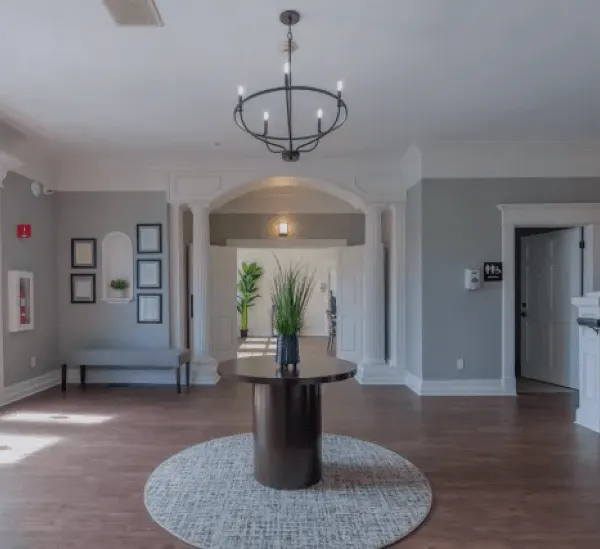
If you’ve decided it’s time to get treatment, the next question is usually: what does this actually look like? What happens on day one? How many hours a week does it take? Can you keep working?
For people in the Portland area, outpatient addiction treatment is often the right level of care - structured enough to drive real change, flexible enough to fit around a job, a family, or both. At Discover Recovery’s Portland location, we offer two outpatient programs: a partial hospitalization program (PHP) and an intensive outpatient program (IOP). Each serves a different stage and intensity of recovery.
This guide explains what to expect from both - the structure, the therapies, the clinical approach, and how to know which program fits your situation.
What Is Outpatient Addiction Treatment?
Outpatient addiction treatment is a structured program that delivers clinical care - therapy, medical management, peer support, and skills training - while you live at home and maintain your daily responsibilities. Unlike residential treatment, there is no overnight stay. You come to our Portland center for scheduled sessions, then return home each evening.
Outpatient care works best when you have a stable home environment, a reasonable support system, and a level of addiction that doesn’t require 24/7 medical supervision. It’s also a strong option for people stepping down from residential treatment who need continued structure without the same level of intensity.
According to the National Institute on Drug Abuse (NIDA), treatment programs that last at least 90 days produce significantly better recovery outcomes than shorter-term programs. Outpatient treatment - particularly PHP and IOP - can meet or exceed that threshold while allowing you to remain connected to your life.
PHP vs. IOP - Which Outpatient Program Is Right for You?
Discover Recovery’s Portland location offers two distinct levels of outpatient care. Understanding the difference helps you and our clinical team identify the right starting point.
Partial Hospitalization Program (PHP)
PHP is the more intensive of the two programs. Clients attend treatment most days of the week for several hours each day, receiving a level of clinical support that sits just below residential care. PHP is designed for people who:
- Are stepping down from residential or inpatient treatment and still need significant daily support
- Have moderate-to-severe substance use disorder but don’t require overnight medical monitoring
- Need comprehensive psychiatric assessment and integrated mental health care alongside addiction treatment
- Cannot yet safely manage their recovery without daily clinical contact
At Discover Recovery Portland, PHP includes psychiatric evaluation, individual therapy, group therapy, medication management, and holistic therapies such as mindfulness, yoga, and art therapy. It’s the strongest clinical foundation we offer on an outpatient basis.
Intensive Outpatient Program (IOP)
IOP offers more scheduling flexibility while still providing meaningful clinical structure. According to SAMHSA’s Treatment Improvement Protocol, intensive outpatient programs typically provide 9–20 hours of programming per week, delivered in sessions of 3–4 hours, several days a week. Morning and evening tracks allow clients to work or manage family commitments around their treatment schedule.
IOP is well-suited for people who:
- Have completed PHP or residential treatment and are transitioning to greater independence
- Have mild-to-moderate substance use disorder and a supportive home environment
- Need more structure than weekly outpatient counseling but can manage daily life between sessions
- Are balancing treatment with work, school, or caregiving responsibilities
Both programs are available at our Portland, OR location at 1902 SE Morrison St.
|
PHP |
IOP |
|
|
Intensity |
High - daily clinical programming |
Moderate - multiple sessions per week |
|
Typical hours/week |
20–30+ hours |
9–20 hours |
|
Best for |
Step-down from residential; higher clinical need |
Step-down from PHP; maintaining daily responsibilities |
|
Schedule |
Most days of the week |
3–5 days per week, morning or evening |
|
Dual diagnosis care |
Yes - integrated psychiatric support |
Yes - integrated psychiatric support |
If you’re not sure which program fits your situation, our admissions team will conduct a full clinical assessment before you begin. We don’t assume - we evaluate.
What Does a Typical Day in Outpatient Treatment Look Like?
One of the most common questions people ask before starting treatment is simply: what will I actually be doing?
A typical day in Discover Recovery’s PHP program might start with a group therapy session focused on relapse prevention. From there, you’d move into an individual session with your assigned clinician - time dedicated to your specific triggers and goals. Afternoon blocks often include psychoeducation workshops: the neuroscience of addiction, stress management, communication skills. The day closes with a check-in group. For clients receiving medication-assisted treatment (MAT), medication management appointments are built into the schedule.
In IOP, the structure is similar but compressed into a shorter block - typically a morning or evening session of 3–4 hours that includes group therapy, individual therapy on a rotating schedule, and skills training. This allows clients to hold jobs or manage family life while continuing structured care.
Across both programs, treatment is not passive. You’re not sitting in a waiting room or watching lectures. You’re in sessions, working with therapists and peers, actively building the tools that make recovery sustainable outside of treatment hours.
Dual Diagnosis Care: Treating Addiction and Mental Health Together
More than half of people who enter treatment for substance use disorder are also managing a co-occurring mental health condition - according to SAMHSA’s 2022 National Survey on Drug Use and Health. Depression, anxiety, PTSD, and bipolar disorder are among the most common. In many cases, those conditions are directly connected to the pattern of substance use: people use substances to cope with symptoms they don’t have another way to manage.
Treating addiction alone, without addressing the underlying mental health condition, leaves the root cause in place. That’s why Discover Recovery’s Portland outpatient programs integrate co-occurring disorder treatment from the first day of care.
Every client in our PHP and IOP receives a full psychiatric evaluation at intake. From there, mental health treatment - including therapy and psychiatric medication management where appropriate - runs alongside addiction treatment as part of a unified plan. Our clinical team includes professionals trained specifically in dual diagnosis care, and therapies like EMDR and DBT are available to address trauma-related presentations that often underlie substance use.
This integrated model is one of Discover Recovery’s core clinical differentiators. We don’t treat addiction first and mental health second - we treat both together, because that’s what the evidence supports.
Types of Treatment Available in Our Outpatient Programs
Discover Recovery Portland’s outpatient programs draw from a full range of evidence-based and complementary therapies. What you receive will be shaped by your individual treatment plan, but the following components are standard across our programs.
Individual Therapy
You’ll meet regularly with a licensed therapist for one-on-one sessions designed to explore the specific triggers, thought patterns, and life circumstances driving your substance use. Individual therapy is where you build the most personalized insight - and where goals for recovery are set, reviewed, and adjusted as you make progress.
Group Therapy
Group sessions create a therapeutic environment where clients learn from one another’s experiences, practice interpersonal skills, and build accountability. Hearing from peers who are navigating the same challenges - at different points in their recovery - is often more powerful than anything said in a textbook. Group therapy is a cornerstone of both our PHP and IOP programs.
Family Therapy
Addiction doesn’t happen in isolation, and neither does recovery. Family therapy sessions involve your loved ones in the process - repairing communication, addressing unhealthy dynamics, and helping family members understand how to support recovery without enabling it. We also connect family members with resources like Al-Anon and Nar-Anon for additional peer support outside of sessions.
Evidence-Based Behavioral Therapies
Our clinicians are trained in the therapies with the strongest research backing for addiction treatment. Cognitive behavioral therapy (CBT) helps you identify and interrupt the thought patterns that feed substance use. Dialectical behavior therapy (DBT) builds emotional regulation and distress tolerance - skills that are especially important for people managing co-occurring mood disorders or trauma. Both are available across our outpatient programs.
Medication-Assisted Treatment (MAT)
For opioid and alcohol use disorders, medication-assisted treatment is one of the most effective clinical tools available. MAT uses FDA-approved medications - including buprenorphine, naltrexone, and methadone - to reduce cravings and manage withdrawal symptoms, allowing you to engage fully in therapy without being destabilized by physical dependence. MAT is not a substitute for therapy; it’s a clinical tool that makes therapy more accessible and effective.
Life Skills and Relapse Prevention
Sustaining recovery requires practical skills, not just insight. Our programs include training in stress management, communication, time management, financial decision-making, and the mechanics of identifying and responding to relapse triggers before they escalate. Relapse prevention isn’t a single session - it’s a thread woven throughout the entire program.
Holistic and Complementary Therapies
Discover Recovery integrates mindfulness, meditation, yoga, and art therapy into our outpatient programming. These approaches support the physical and emotional dimensions of recovery that talk therapy alone doesn’t always reach. They also give clients tools they can use independently - practices that continue supporting sobriety long after formal treatment ends.
Why Choose Discover Recovery for Outpatient Treatment in Portland?
There are several outpatient programs in the Portland area. Here’s what sets Discover Recovery apart in ways that matter clinically.
Dual diagnosis as a standard, not an add-on. Every client receives a psychiatric evaluation. Mental health treatment is integrated into your care plan from day one - not referred out or treated separately.
Up to four individual therapy sessions per week. Most outpatient programs in the region offer significantly less one-on-one clinical time. We believe individual therapy is where the most targeted work happens, and we structure our programs to reflect that.
CARF and Joint Commission accreditation. Both are rigorous third-party quality standards. Our accreditation through both organizations signals a commitment to clinical quality and ethical care that isn’t universal in the outpatient space.
A full continuum when you need it. If your clinical needs shift - upward or downward - we don’t have to refer you out. Residential and medical detox programs are available at our Washington locations in Camas and Long Beach, and sober living is available for Portland outpatient clients who need a stable, substance-free living environment during treatment.
The Role of Family in Outpatient Recovery
The people closest to you are part of what makes outpatient treatment work - or makes it harder. Discover Recovery actively involves family throughout the outpatient process.
Family therapy sessions give everyone involved a structured, facilitated space to address what addiction has disrupted: communication, trust, roles, resentments. A trained therapist guides these sessions - they are not intervention-style confrontations but collaborative conversations aimed at building the home environment that supports recovery.
For family members who are struggling with their own emotional response to a loved one’s addiction, we connect them to Al-Anon and Nar-Anon groups, as well as educational resources that help them understand what addiction is - a treatable health condition, not a moral failure - and how to support without enabling.
Research published by SAMHSA consistently links family involvement in treatment to improved retention and long-term recovery outcomes. It’s a standard part of how we work - not an optional add-on.
Does Insurance Cover Outpatient Addiction Treatment?
In most cases, yes. The Mental Health Parity and Addiction Equity Act (2008) requires most health insurance plans to cover substance use disorder treatment at parity with other medical conditions. PHP and IOP are covered treatment levels under the majority of private insurance plans.
Discover Recovery works with most major private insurance carriers. We do not accept state-funded insurance (such as Oregon Health Plan or Washington Apple Health) or Medicaid at this time, but we do accept Tricare for eligible veterans and active-duty service members.
Before you begin treatment, our admissions team will verify your insurance benefits and walk you through your estimated out-of-pocket costs - no surprises. To check your coverage now, call us at 866.719.2173 or use our online insurance verification form.
Frequently Asked Questions About Outpatient Treatment in Portland
How long does outpatient treatment last?
Program duration varies based on your clinical needs and progress. PHP typically runs several weeks, followed by a step-down to IOP. IOP programs generally range from 8–12 weeks, though duration is adjusted based on individual progress and treatment plan goals. NIDA’s Principles of Drug Addiction Treatment (updated 2018) recommends that programs last at least 90 days, noting that longer treatment duration is consistently associated with better outcomes.
How many hours per week is the program?
PHP involves the most hours - typically 20–30+ hours per week of structured clinical programming. IOP, per SAMHSA’s guidelines, involves 9–20 hours per week. Your specific schedule will be determined at intake based on your clinical assessment.
Can I work or attend school while in outpatient treatment?
Yes - this is one of the core design features of outpatient care. IOP in particular offers morning and evening scheduling options to accommodate work and school. PHP requires more hours and may limit full-time work during the early phase of treatment, though many clients manage part-time work alongside PHP.
What if I need more intensive care than outpatient provides?
If your clinical needs exceed what PHP can address on an outpatient basis, Discover Recovery offers residential treatment and medical detox at our Camas, WA and Long Beach, WA locations. Our admissions team can help you understand which level of care fits your situation and facilitate a seamless transition if needed.
Is outpatient treatment effective?
Yes. Research consistently supports the effectiveness of structured outpatient treatment, particularly when it integrates evidence-based therapies, addresses co-occurring mental health conditions, and includes aftercare planning. Effectiveness is also influenced by your engagement in the program - the more actively you participate in therapy and apply the skills you’re learning, the stronger the outcomes.
What happens after outpatient treatment ends?
Discover Recovery builds aftercare planning into your program from the start - not as an afterthought at discharge. Aftercare may include referrals to individual therapists in the community, ongoing psychiatric medication management, alumni program participation, and connection to peer support groups. For clients who want continued structured accountability, our sober living options provide a substance-free living environment with community support.
Take the Next Step Toward Outpatient Treatment in Portland
Deciding to get help is the hardest part. Once you make that call, our admissions team handles the rest - a clinical assessment to identify the right level of care, insurance verification, and a clear plan for what your first week looks like.
Discover Recovery’s Portland outpatient programs are located at 1902 SE Morrison St, Portland, OR 97214. We serve the Portland area and surrounding communities across the Pacific Northwest.
Call us today at 866.719.2173 - our team is available 24/7 to answer your questions and help you take the next step.