
If you have PPO insurance and are looking into addiction treatment, you’re already in a stronger position than you may realize.
PPO insurance - short for Preferred Provider Organization - is widely regarded as one of the most flexible plan types for accessing substance use disorder treatment. It lets you choose your own provider, skip the referral process, and in many cases access care outside your local provider network. For someone ready to take the step toward treatment, that flexibility can make a real difference.This article is for people who already have PPO coverage and want to understand exactly what it covers, how it works, and what steps to take to use it. If you’re still exploring whether your insurance covers rehab at all, our guide to insurance and rehab coverage is a good place to start.
What Is PPO Insurance?
A Preferred Provider Organization (PPO) is a type of health insurance plan that gives members access to a network of preferred providers at reduced costs - while still allowing them to receive some coverage for care outside that network. Unlike HMO plans, PPOs do not require you to designate a primary care physician (PCP) or get a referral before seeing a specialist. This means you can contact a treatment center directly, verify your benefits, and begin the admissions process without going through an intermediary first. PPO plans are one of the most common forms of employer-sponsored insurance in the United States, making them a frequent path to addiction treatment for working adults and their families.
Why PPO Insurance Works Well for Addiction Treatment
For most insurance plan types, accessing addiction treatment involves navigating referrals, network restrictions, and prior authorizations that can slow things down - sometimes significantly. PPO plans reduce several of those barriers. No referral required. You can contact a treatment center directly and begin the admissions process without waiting for a primary care physician to approve the next step. Broader provider access. PPO networks tend to be larger than HMO networks, which means more treatment facilities may be covered in-network. And if the program you want is out-of-network, your PPO will typically still cover a portion of the cost. Out-of-network coverage for specialized care. If you need a dual diagnosis program, a specific level of care, or a facility outside your area, a PPO gives you the legal right to access that care - even at out-of-network rates. ACA and parity law protections apply. Under the ACA’s essential health benefits mandate, plans sold through the Health Insurance Marketplace must cover substance use disorder treatment as an essential health benefit. The Mental Health Parity and Addiction Equity Act (MHPAEA) requires that your plan treat addiction treatment no more restrictively than any other medical care.
What Does PPO Insurance Cover for Addiction Treatment?
PPO plans can cover a wide range of addiction treatment services, though the specifics depend on your individual plan. Here is what most PPO plans include when treatment is deemed medically necessary.
Medical Detox
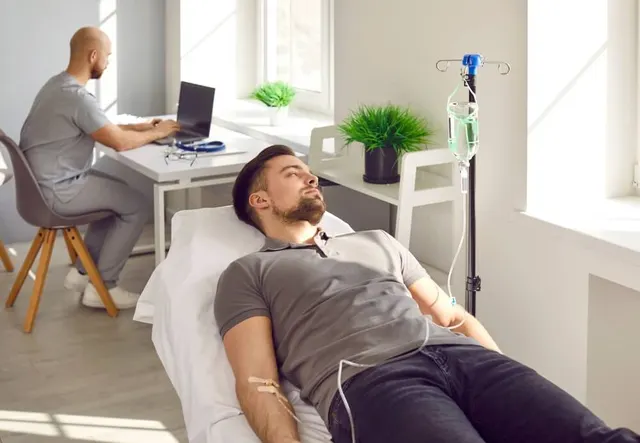
Medical detox is the process of safely managing withdrawal from alcohol or drugs under clinical supervision. For many substances - including alcohol, benzodiazepines, and opioids - withdrawal can be medically dangerous without proper monitoring. Most PPO plans cover medically necessary detox as a hospital-level or residential service. Coverage typically includes the physician and nursing care required to manage withdrawal safely. At Discover Recovery, medical detox is the first step in treatment for patients who need it. Our clinical team manages withdrawal around the clock so patients can transition into the next phase of care as safely as possible.
Residential Treatment
Residential treatment involves living at a treatment facility for a period of time - typically 28 to 90 days - while receiving intensive clinical care, therapy, and peer support. According to SAMHSA’s Treatment Episode Data Set (TEDS), the average stay in residential treatment typically ranges from 30 to 90 days, depending on the level of care and individual clinical need. PPO plans commonly cover residential treatment when it is medically necessary, though your deductible, coinsurance, and out-of-pocket maximum will affect your final costs. Residential treatment at Discover Recovery is available at our Long Beach, WA facility - a coastal Pacific Northwest setting that removes patients from the environments and triggers that can make early recovery harder.
Partial Hospitalization Program (PHP)
PHP is a structured, full-day outpatient program - typically five days per week - for patients who need intensive clinical support but do not require 24-hour residential care. Most PPO plans cover PHP when clinical criteria are met. It is often used as a step-down from residential treatment or as a primary level of care for patients with strong home support.
Intensive Outpatient Program (IOP)
IOP provides structured group and individual therapy sessions several days per week while allowing patients to live at home or in sober living housing. PPO coverage for IOP is common and typically applies when the level of care is clinically appropriate. Learn more about Discover Recovery’s IOP program.
Dual Diagnosis Treatment
Many people entering addiction treatment are also living with a co-occurring mental health condition - depression, anxiety, PTSD, bipolar disorder, or others. When both conditions are treated simultaneously, outcomes improve. PPO plans that cover addiction treatment are generally required under MHPAEA to cover mental health treatment at the same level. This means integrated dual diagnosis care - treating the substance use disorder and the co-occurring condition together - should be covered when medically necessary. Discover Recovery specializes in co-occurring disorder treatment. If you are entering treatment with both a substance use disorder and a mental health condition, this is one of our strongest clinical differentiators.
Medication-Assisted Treatment (MAT)
Medication-Assisted Treatment uses FDA-approved medications - such as buprenorphine, naltrexone, or methadone for opioid use disorder, and acamprosate or naltrexone for alcohol use disorder - alongside behavioral therapy to support recovery. Most PPO plans cover both MAT medications and the clinical visits required to manage them - including prescribing appointments and associated behavioral therapy - when treatment is part of a documented plan. Coverage may fall under medical benefits, pharmacy benefits, or both - your plan documents or a benefits call will clarify which applies.
Do You Need a Referral to Go to Rehab With PPO Insurance?
No - in most cases, a PPO plan does not require a referral from a primary care physician before you can enter addiction treatment. This is one of the most meaningful advantages of PPO over HMO plans for people seeking treatment. You can call a treatment center directly, ask them to verify your benefits, and begin the admissions process the same day in many cases. Some PPO plans do require prior authorization - meaning the insurer reviews and approves the level of care before treatment begins. This is different from a referral. If your plan requires prior authorization, the admissions team at most treatment centers will handle that process on your behalf.
In-Network vs. Out-of-Network Rehab With a PPO
Understanding the difference between in-network and out-of-network coverage is one of the most important things you can do before choosing a treatment program. In-network providers have a direct contract with your insurance company to provide services at pre-negotiated rates. When you receive care in-network, your plan typically covers a higher percentage of the cost - often 70–90% after your deductible. Out-of-network providers do not have that contract. Your plan may still cover care from out-of-network providers, but typically at a lower rate - often 50–70% - and your out-of-pocket costs will be higher. The bottom line: always verify whether a specific facility is in-network before enrolling. The treatment center’s admissions team can confirm this - it takes a phone call and your insurance card.
How to Use Your PPO Insurance to Start Treatment
The process is more straightforward than most people expect. Here are the steps:
- Locate your insurance card. You will need your member ID, group number, and the customer service number on the back of the card.
- Call the treatment center. The admissions team at your chosen facility will contact your insurance company directly to verify your benefits. You do not need to navigate this alone - at Discover Recovery, our admissions team handles this call for you.
- Complete a benefits verification. The admissions team will confirm your coverage level, deductible status, coinsurance rate, and any prior authorization requirements.
- Understand your out-of-pocket estimate. Before committing to a program, ask for a clear estimate of your expected costs based on your verified benefits.
- Confirm prior authorization if required. If your plan requires it, the treatment center handles the submission. You will typically receive a decision within 24–72 hours.
- Begin treatment. Once benefits are verified and authorization is in place, you can focus entirely on what matters - getting well.
To verify your PPO benefits for treatment at Discover Recovery, use our online insurance verification form or call us directly at 866.719.2173.
Questions to Ask Your PPO Before You Enroll
Before committing to a program, it is worth a quick call to your insurer. This doesn’t have to be complicated - most insurers have a behavioral health line on the back of your card, and the questions below take less than 15 minutes to get through. Ask:
- Is in-network under my plan?
- What is my deductible, and how much has been met this year?
- What is my coinsurance rate for inpatient vs. outpatient treatment?
- What is my out-of-pocket maximum?
- Does my plan require prior authorization for residential treatment? For PHP? For IOP?
- Does my plan cover dual diagnosis treatment?
- Does my plan cover MAT medications - and is that under medical or pharmacy benefits?
- Is there a limit on the number of covered days for inpatient treatment?
Bring this information to the admissions conversation. It will give you a much clearer picture of what your total costs will look like.
Does Discover Recovery Accept PPO Insurance?
Yes. Discover Recovery works with most major PPO insurance plans. Our admissions team handles the benefits verification and prior authorization process on your behalf. We treat patients at our facilities in Long Beach, WA, Camas, WA, and Portland, OR. We are CARF-accredited and Joint Commission approved - two of the most rigorous independent accreditations in behavioral health - and we are a VA Community Care Network provider for veterans seeking treatment.If you have PPO insurance and are ready to take the next step, call us at 866.719.2173 or verify your coverage online. A conversation is free. Your insurance may cover more than you think.