

If you or someone you love is drinking in a way that’s causing harm โ to health, relationships, work, or safety โ and stopping feels impossible without help, that’s not a character flaw. It’s how alcohol use disorder works. It’s also a well-understood, treatable medical condition โ and help that actually works is more accessible than most people realize.
This guide explains what alcohol treatment actually involves: what the levels of care are, when medical detox is necessary, what medications can help, and how to find the right fit for where you are right now.
What Is Alcohol Use Disorder?
Alcohol use disorder (AUD) is a medical condition defined by an impaired ability to stop or control alcohol use despite negative consequences โ social, occupational, or physical. According to the National Institute on Alcohol Abuse and Alcoholism (NIAAA), it encompasses what has historically been called alcohol abuse, alcohol dependence, and alcoholism.
Healthcare professionals diagnose AUD using criteria from the Diagnostic and Statistical Manual of Mental Disorders, Fifth Edition (DSM-5). Severity is based on how many of 11 criteria a person meets:
- Mild AUD: 2โ3 criteria
- Moderate AUD: 4โ5 criteria
- Severe AUD: 6 or more criteria
Common criteria include: drinking more or longer than intended, repeated failed attempts to cut back, spending significant time obtaining or recovering from alcohol, cravings, continued use despite relationship or work problems, and experiencing withdrawal symptoms when not drinking.
According to NIAAA’s 2024 National Survey on Drug Use and Health (NSDUH), 27.9 million people ages 12 and older โ roughly 9.7% of that age group โ had AUD in the past year. Excessive alcohol use contributes to approximately 178,000 deaths in the United States each year, according to the CDC. Despite this scale, the vast majority of people with AUD never receive treatment. If you’re reading this, you’re already taking a step most people don’t.
Signs That Alcohol Treatment May Be Needed
There’s no single threshold that determines when someone needs professional treatment. But the following are common indicators that self-management is no longer enough:
- Drinking has increased over time, even with intentions to cut back
- Withdrawal symptoms appear when not drinking โ tremors, sweating, nausea, anxiety, or difficulty sleeping
- Alcohol use is interfering with work, family, or health
These first three often point to physical dependence. The following may indicate a deeper pattern that professional treatment is best equipped to address:
- Drinking continues despite a diagnosed health condition made worse by alcohol
- Previous attempts to stop on your own haven’t lasted
- A doctor or loved one has raised concerns
If withdrawal symptoms are present โ especially shaking, rapid heartbeat, or seizures โ do not attempt to stop drinking without medical supervision. Alcohol withdrawal can be life-threatening and requires professional management.
Do You Need Medical Detox First?
For people with significant alcohol dependence, stopping suddenly without medical support can be dangerous. Alcohol withdrawal is one of the few substance withdrawals that can cause seizures and a condition called delirium tremens (DTs), which can develop within 24โ72 hours of the last drink.
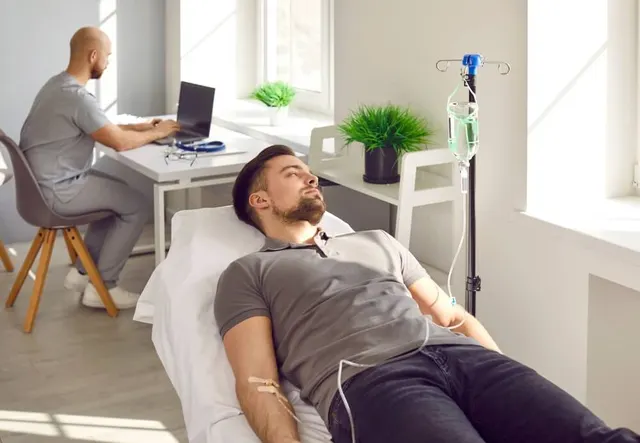
Medical detox provides around-the-clock monitoring, medication support, and a stable environment to get through withdrawal safely. It is not the same as treatment โ it’s the first step that makes treatment possible. Detox alone, without continuing into a residential or outpatient program, is not associated with lasting recovery, according to NIAAA.
At Discover Recovery, our medical detox program at our Long Beach and Camas, WA locations includes 24/7 medical monitoring, medication-assisted treatment (MAT) as needed, and nutritional support โ followed by a direct transition into the next level of care.
Types of Alcohol Treatment Programs
Alcohol treatment isn’t one thing โ it’s a range of options matched to where you are. The right level of care depends on how severe the dependence is, what your living situation looks like, whether there are co-occurring mental health conditions, and what you’re working toward. Here’s how the continuum is structured:
Medical Detox
If you’re physically dependent on alcohol, detox is where treatment starts โ and it shouldn’t be done alone. Medical detox typically runs 5โ10 days, with clinical staff managing withdrawal symptoms around the clock so your body can stabilize safely before any therapeutic work begins.
Residential Treatment (Inpatient Rehab)
Residential treatment is the right level of care for people with moderate to severe AUD, a history of relapse, or limited support at home. Clients live on-site for 30โ90 days, participating in individual therapy, group sessions, and evidence-based programming each day. Being in a structured residential environment removes the triggers and stressors that fuel active drinking, so the focus can be entirely on recovery.
Partial Hospitalization Program (PHP)
PHP is a step down from residential โ and for some, a strong starting point in its own right. It provides intensive daily treatment, typically 4โ6 hours per day, five days per week, while clients live at home or in sober living. The clinical depth is comparable to residential; the structure accommodates more of daily life.
Intensive Outpatient Program (IOP)
IOP is structured group and individual therapy several days per week โ usually 9โ15 hours of programming total. It’s appropriate for people with mild to moderate AUD who have a stable, supportive home environment, and works well as a step-down from residential or PHP.
Standard Outpatient
Less intensive than IOP, standard outpatient typically involves weekly therapy sessions with a counselor or addiction specialist. It suits people in early-stage AUD or those maintaining recovery following a more intensive program.
Medication-Assisted Treatment (MAT)
MAT combines FDA-approved medications with behavioral therapy to reduce cravings, ease withdrawal, and support long-term recovery. It can be integrated into any level of care and is one of the most evidence-supported tools in alcohol treatment โ and one of the most underused.
Sober Living / Transitional Housing
Structured, substance-free housing that provides accountability and community support during the transition back to independent living. Available after residential treatment at Discover Recovery’s Camas and Long Beach, WA campuses.
Aftercare
Recovery doesn’t end at discharge. Aftercare includes ongoing therapy, alumni programming, and connection to community resources โ the infrastructure that helps people sustain sobriety and rebuild a full life.
Medications for Alcohol Use Disorder
Medication-assisted treatment is one of the most underused tools in AUD recovery. According to NIAAA’s 2024 National Survey on Drug Use and Health, only 2.4% of adults with AUD received MAT in the past year โ a fraction of those who could benefit.
Three medications are currently FDA-approved for AUD:
Naltrexone โ Available in oral form or as an extended-release injectable (Vivitrol). Works by blocking the opioid receptors in the brain that create the rewarding effects of drinking, which reduces cravings and the reinforcing pleasure of alcohol. Can be started while a patient is still drinking.
Acamprosate โ Helps restore the chemical balance in the brain disrupted by chronic alcohol use. Most effective at reducing cravings during early recovery after detox. Not recommended for people with severe kidney disease.
Disulfiram โ Creates an acute physical reaction โ flushing, nausea, rapid heartbeat โ if alcohol is consumed. Works as a deterrent for people who are highly motivated to stop drinking and want an additional layer of accountability. Requires consistent adherence to be effective.
These medications are not addicting and do not require specialized prescribing authority. At Discover Recovery, MAT is integrated into detox and treatment planning.
Alcohol Treatment and Co-occurring Disorders
Alcohol use disorder and mental health conditions frequently occur together โ and treating one without addressing the other rarely leads to lasting recovery.
According to NIAAA, depression, PTSD, and anxiety disorders are among the most common conditions that co-occur with AUD. In many cases, people use alcohol to self-medicate emotional pain. In others, chronic heavy drinking changes brain chemistry in ways that trigger or worsen depression and anxiety. The direction of causation often runs both ways.
Dual diagnosis treatment โ also called co-occurring disorder treatment โ addresses substance use and mental health simultaneously through an integrated clinical approach. This is Discover Recovery’s clinical specialty.
Every client who enters our programs undergoes a comprehensive psychiatric evaluation. If a co-occurring condition is identified, treatment planning incorporates evidence-based therapies for both โ including CBT, DBT, EMDR for trauma, and medication management. You won’t be asked to get sober first and then address the mental health piece. Both are treated at the same time, because that’s what the evidence supports.
If you’re drinking and also struggling with depression, PTSD, or anxiety, you don’t need two separate programs โ you need one that treats both at the same time. Learn more about our co-occurring disorders treatment.
What to Expect in Alcohol Rehab
For people who haven’t been through treatment before, the process can feel opaque. Here’s what typically happens:
Assessment and intake. Before treatment begins, you’ll undergo a clinical assessment โ a conversation with a counselor or medical professional covering your drinking history, physical health, any medications, and mental health. This determines the appropriate level of care and informs your treatment plan.
Medical detox (if needed). If you’re physically dependent on alcohol, the first phase is supervised withdrawal. Medical staff monitor vitals, manage symptoms with medication if necessary, and ensure you’re stable and comfortable before therapeutic work begins.
Residential or outpatient programming. Daily programming varies by level of care. In residential treatment at Discover Recovery, clients typically have four individual therapy sessions per week alongside group sessions, psychoeducation, and evidence-based modalities including CBT, DBT, and trauma-focused therapies like EMDR. Experiential options โ yoga, equine therapy, art therapy, TMS โ run alongside clinical work, not instead of it. The goal is a schedule structured enough to build new patterns, flexible enough to be human.
Discharge planning and aftercare. Before you leave, your team works with you to build a plan for what comes next โ step-down care, sober living, ongoing therapy, and community connections that support long-term sobriety.
How Long Is Alcohol Treatment?
There’s no universal answer, because treatment length should match the person โ not a calendar. That said:
- Medical detox typically lasts 5โ10 days
- Residential treatment generally runs 30, 60, or 90 days; research consistently shows that longer stays are associated with better outcomes
- PHP and IOP are usually 4โ12 weeks, depending on progress and individual needs
- Ongoing outpatient and aftercare can continue for a year or more
NIAAA recommends thinking of AUD treatment in months, not days or weeks. Recovery is a process, and the structure of care should match the pace of that process โ not an arbitrary deadline.
Does Insurance Cover Alcohol Treatment?
Most health insurance plans โ including ACA marketplace plans, employer-sponsored coverage, and Medicaid โ are required to cover substance use disorder treatment at the same level as other medical conditions, under the Mental Health Parity and Addiction Equity Act (MHPAEA). Short-term or grandfathered plans may have different rules.
Discover Recovery works with a wide range of insurance providers across Washington and Oregon. If you’re not sure what your coverage includes, our team can help you verify your benefits โ at no cost and with no obligation.
Alcohol Treatment at Discover Recovery
Discover Recovery offers a full continuum of care across three Pacific Northwest locations: Long Beach and Camas, Washington, and Portland, Oregon.
Our programs include medical detox, residential treatment, sober living, PHP, IOP, and aftercare. Every client receives a personalized treatment plan built around their specific history, goals, and any co-occurring conditions. We are CARF-accredited and Joint Commission-approved โ two of the most rigorous quality standards in the field.
Whether you’re just beginning to ask whether your drinking has become a problem, or you’ve tried to stop before and it hasn’t held โ a strong treatment match, the right level of care, the right clinical team, a plan that accounts for your full picture โ is what makes the difference between short-term sobriety and lasting recovery.
Call us at 866.719.2173 or verify your insurance online.
Frequently Asked Questions About Alcohol Treatment
What is the first step in alcohol treatment? The first step is an assessment โ a clinical conversation that determines what level of care is appropriate based on your drinking history, physical health, and any mental health concerns. If you’re physically dependent on alcohol, medical detox typically comes before any therapeutic programming.
Do I need medical detox before entering rehab? Not everyone does, but if you drink heavily and regularly, medical supervision during withdrawal is strongly recommended. Alcohol withdrawal can cause seizures and delirium tremens (DTs), which are potentially life-threatening. A clinical assessment will determine whether detox is necessary before you begin a residential or outpatient program.
How long does alcohol treatment take? It depends on the severity of the disorder and the level of care. Medical detox is typically 5โ10 days. Residential treatment commonly runs 30โ90 days. Outpatient programs like PHP and IOP can last 4โ12 weeks. Aftercare and ongoing support often continue for a year or more. NIAAA recommends thinking of treatment in months, not weeks.
What medications are used to treat alcohol use disorder? Three medications are FDA-approved for AUD: naltrexone (oral or injectable), acamprosate, and disulfiram. Each works differently โ naltrexone reduces the rewarding effects of alcohol, acamprosate helps restore brain chemistry in early recovery, and disulfiram creates a physical deterrent response to drinking. MAT is most effective when combined with behavioral therapy.
Can alcohol treatment also address depression or anxiety? Yes โ and it should. Depression, anxiety, and PTSD frequently co-occur with AUD. Treating substance use without addressing mental health, or vice versa, leaves the root causes unaddressed. Discover Recovery specializes in dual diagnosis treatment, integrating both into a single, coordinated care plan.
Does insurance cover alcohol rehab in Washington or Oregon? Most major insurance plans cover alcohol treatment, including Medicaid and ACA marketplace plans. Discover Recovery works with a wide range of providers and can help you verify your benefits before you commit to anything. Call 866.719.2173 or use our online insurance verification form.
Reviewed By: Dr. Kevin Fischer, M.D.
Kevin Fischer, MD is an experienced leader in the fields of Internal Medicine and Addiction Medicine. He works with patients suffering from Substance Use Disorder to evaluate their comprehensive health needs and prescribe Medication-Assisted Treatment (MAT). In addition, he mentors aspiring health professionals and leads collaborative care through team-based medical models. He also directs treatment strategies and streamlines clinical protocols for effective substance use recovery.