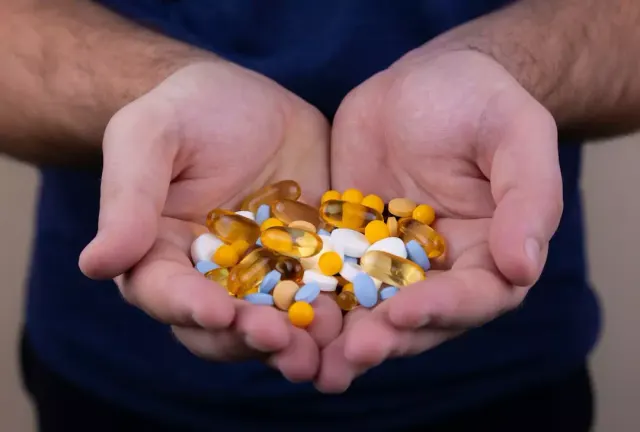

The War on Drugs was a U.S. government campaign launched in 1971 by President Richard Nixon. It aimed to reduce drug use through aggressive law enforcement, mandatory sentencing, and increased funding for interdiction efforts. Despite costing taxpayers over $1 trillion in federal, state, and local spending over five decades, drug use rates remained stable while incarceration rates soared. This massive investment without a corresponding public health return highlights the campaign’s fundamental policy failures.
Why Did the Law-Enforcement Focus Fail?
What Were the Core Strategies of the War on Drugs?
The War on Drugs treated substance use as a criminal problem rather than a public health crisis. This approach focused on three primary, failed strategies: restricting drug supply, reducing demand through fear campaigns, and punishing users with incarceration. None of these tactics addressed the underlying chronic disease of addiction, causing people to cycle through the criminal justice system without receiving necessary rehabilitation or prevention services.
How Did the Policy Cause Racial Disparities?
The campaign was criticized for explicitly targeting specific racial groups from its inception. A top Nixon aide admitted the administration associated drugs with African-Americans and anti-war activists to justify aggressive enforcement.
- This pattern was not new: U.S. drug laws have historically targeted marginalized communities.
For example, opium laws aimed at Chinese immigrants in the 1870s, cocaine laws targeted African-Americans in the early 1900s, and marijuana laws focused on Mexican immigrants in the 1920s.
What Was the Disproportionate Impact on Communities of Color?
The ACLU’s research found that Black and Brown communities were arrested at rates 2-3 times higher than white communities for identical drug offenses, despite similar usage rates across racial groups.
The consequences of these disparities – disrupted families, limited employment, and perpetuated cycles of poverty – were felt most severely in communities already facing systemic disadvantages.
How Did Mass Incarceration Grow Without Results?
Between 1980 and 2015, the U.S. prison population surged from 500,000 to 2.3 million people. Drug offenses accounted for a significant portion of this growth. In 2015 alone, law enforcement made 1.3 million arrests for drug possession – six times more than arrests for drug sales. Filling prisons with people arrested for possession did not reduce addiction rates or drug availability, creating a massive financial and social burden.
What Are the Evidence-Based Alternatives to the War on Drugs?
When Did Public Opinion Shift to Treatment Over Punishment?
By 2015, public sentiment had shifted significantly away from the policies of the War on Drugs. Despite federal prohibition, states began legalizing marijuana for medical and recreational use. The disconnect between federal policy and state action revealed a widespread public recognition that incarceration failed to solve addiction. Furthermore, research from the National Institute on Drug Abuse showed that treatment programs reduced drug use by 40–60%.
How Does a Health-Based Approach Work?
Contemporary drug policy focuses on four key pillars: prevention, education, treatment, and rehabilitation. This model views substance use disorder as a medical condition requiring compassionate care, rather than a moral failure requiring punishment.
- Policy Example: Portugal implemented this health-first approach in 2001 by decriminalizing all drugs and redirecting enforcement budgets to treatment.
- Outcome: Within two decades, Portugal saw drug-related deaths decrease by 80%.
What Are Harm Reduction Services?
Harm reduction services aim to reduce the negative consequences of drug use without demanding abstinence.
- Examples include needle exchange programs, naloxone distribution, supervised consumption sites, and medication-assisted treatment.
- Studies from sites in Canada and Europe show decreased emergency services usage and increased treatment enrollment without increasing drug use in surrounding areas.
Why Is Replacing Incarceration With Treatment Cost-Effective?
Modern policies divert people from the criminal justice system into treatment programs through methods like drug courts, pre-arrest diversion, and probation alternatives. This approach costs significantly less than incarceration while producing better outcomes for individuals and public safety.
Holistic Addiction Treatment at Discover Recovery
Discover Recovery offers evidence-based drug rehabilitation in Long Beach, Washington. Our compassionate approach treats addiction as a complex disease affecting physical, mental, and emotional health. We provide individualized treatment plans addressing underlying trauma, co-occurring mental health conditions, and environmental factors. Our holistic model prepares individuals for long-term recovery beyond initial treatment.
Contact Discover Recovery to learn more about our treatment programs and how we support lasting recovery.
Frequently Asked Questions (FAQ)
How much money has the United States spent on the War on Drugs?
The War on Drugs has cost over $1 trillion in combined federal, state, and local spending since 1971, including law enforcement and incarceration costs.
Why are Black and Brown communities disproportionately affected by drug enforcement?
Despite similar drug use rates, Black Americans are arrested for drug offenses at rates 2-3 times higher than white Americans. This disparity is rooted in historical drug policies that targeted communities of color and is perpetuated by ongoing selective enforcement practices.
What evidence shows treatment is more effective than incarceration for drug addiction?
Research from the National Institute on Drug Abuse shows that treatment programs reduce drug use by 40-60% and cost less than incarceration. The success of countries like Portugal, which adopted treatment-focused policies, also demonstrates dramatic reductions in drug-related deaths.
When did states start legalizing marijuana despite the War on Drugs?
California legalized medical marijuana in 1996. Colorado and Washington legalized recreational use in 2012, and by 2024, over 20 states had legalized recreational marijuana, reflecting a broad rejection of prohibition-based policies.
What is harm reduction and how does it work?
Harm reduction includes services like needle exchanges and supervised consumption sites that reduce the negative consequences of drug use without requiring abstinence. These programs decrease overdose deaths and disease transmission while connecting people to treatment when they are ready.
Is drug addiction really a disease?
Yes. Major organizations like the American Medical Association and the National Institute on Drug Abuse classify addiction as a chronic brain disease that