If you’re looking for drug and alcohol rehab near Vancouver, WA, you have real options. They include local detox and outpatient programs, hospital-based care in the city, and full-continuum residential treatment about 20 minutes away in Camas, Washington.
Which one is right depends on what you - or the person you love - actually need. This guide walks through the levels of care available near Vancouver, how to evaluate any program you’re considering, and what treatment at Discover Recovery looks like from the first phone call to the drive home.
If it would help to talk it through with a person instead, that’s what we’re here for: 866.719.2173. A conversation is free, and it doesn’t commit you to anything.
What Levels of Care Are Available Near Vancouver?
Addiction treatment near Vancouver spans four main levels of care: medical detox, residential treatment, partial hospitalization (PHP), and intensive outpatient programs (IOP). Understanding these levels matters more than comparing facility names. The right program is the one that offers the level of care your situation calls for - and can adjust as your needs change.
Medical detox - the safe first step
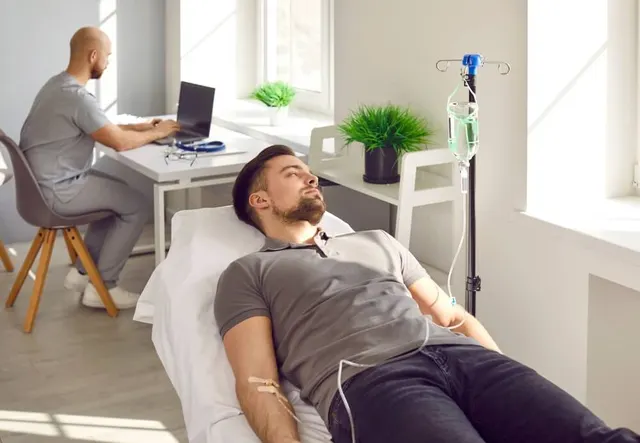
Medical detox is supervised withdrawal, with clinicians managing symptoms and complications as substances leave your body. For some substances, this is a safety requirement, not a comfort measure. Withdrawal from alcohol or benzodiazepines can cause seizures and, in the case of alcohol, a dangerous condition called delirium tremens. Stopping suddenly and alone is the riskiest way to do it. Detox typically lasts three to ten days depending on the substance and your health. It clears the body - it doesn’t treat the addiction. What happens next is where recovery actually starts.
Residential (inpatient) treatment
Residential treatment means living at a facility while you focus entirely on recovery - typically 30 to 90 days of structured therapy, medical oversight, and peer support. It’s the appropriate level of care when home isn’t a safe or stable place to get sober, when previous outpatient attempts haven’t held, or when a co-occurring mental health condition needs simultaneous attention.
PHP and intensive outpatient programs
Partial hospitalization programs (PHP) provide full days of treatment while you sleep at home or in sober living. Intensive outpatient programs (IOP) step that down further - several sessions a week built around work and family life. These levels work best as step-downs from residential care, or as a starting point when a clinical assessment supports it. Vancouver has local outpatient options, and Discover Recovery offers PHP and IOP programs as part of its continuum.
Which level is right depends on a clinical assessment
No article can tell you which level of care you need - and you shouldn’t have to guess. The American Society of Addiction Medicine (ASAM) criteria, the standard clinicians use, weighs withdrawal risk, medical conditions, mental health, home environment, and relapse history. Any reputable program will start with that assessment, not a sales pitch. If a facility recommends its highest level of care without asking real questions first, treat that as a warning sign.
How Do You Choose the Right Rehab Near Vancouver, WA?
To choose a treatment program near Vancouver, verify state licensing, look for independent accreditation, and understand what kind of setting - and how much continuity of care - a program actually offers. The search results for treatment near Vancouver mix genuinely different things: community behavioral health agencies, psychiatric hospitals, private residential programs, and even physical rehabilitation facilities that have nothing to do with addiction. Four checks cut through it.
Verify Washington state licensing
Every legitimate addiction treatment provider in Washington is licensed by the state. You can confirm any facility’s status in about a minute using the Washington Department of Health’s Provider Credential Search. This is the single fastest way to rule out bad actors. If a program isn’t in the system, stop there.
Look for independent accreditation
Accreditation means an independent body has audited a program’s clinical practices, safety standards, and outcomes processes. The two that matter in addiction treatment are CARF (the Commission on Accreditation of Rehabilitation Facilities) and The Joint Commission. Accreditation isn’t legally required - which is exactly why it’s a meaningful signal. A program that volunteers for rigorous third-party review is telling you something about how it operates. Discover Recovery holds both CARF accreditation and Joint Commission approval.
Hospital setting vs. private residential setting
Some programs near Vancouver operate as behavioral health hospitals; others are private residential facilities. Neither is “better” - they serve different needs. A hospital setting is built for acute stabilization: psychiatric emergencies, high-risk medical situations. A private residential setting is built for living: weeks of daily therapy, meals, community, and rest in an environment that feels like a home rather than a ward. For a 30-to-90-day stay, the environment you wake up in every day matters more than most people expect.
Ask whether detox and residential happen in the same place
Here’s a question few families think to ask: if I start in your detox program, where do I go afterward - and do I have to transfer? Some programs run detox at one campus and residential treatment at another, which means packing up and re-admitting somewhere new within days of your last drink or dose. Others hand you a referral list and wish you luck. The answer to this one question tells you more about a program’s continuity of care than any brochure.
Why a Full Continuum in One Place Matters
A full continuum of care means detox, residential treatment, PHP, IOP, and aftercare planning happen within one program - one clinical team, one treatment plan, no starting over between levels. The days immediately after detox are among the most fragile in early recovery. The National Institute on Drug Abuse’s Principles of Drug Addiction Treatment (3rd edition) is consistent on this point: remaining in treatment for an adequate length of time is one of the strongest predictors of a good outcome. Every transition between providers is a place where engagement can break. At Discover Recovery, people move from medical detox directly into residential treatment with the same clinical team, at the same campus. No transfer, no re-admission paperwork, no explaining your story to strangers a second time - your counselors already know how your detox went, because they were there for it. For Vancouver families, that continuum sits just east in Camas - close enough to feel reachable, far enough to leave the environments where the substance use lived. Not sure what level of care fits your situation? That’s a normal place to be. Call 866.719.2173 and talk it through with our admissions team - a confidential conversation, a few honest questions, and a clear picture of your options. No pressure, no obligation.
What Treatment at Discover Recovery Looks Like
Discover Recovery provides medical detox, residential treatment, and step-down care at its Camas, Washington campus - a private residential setting serving the Vancouver and Portland metro area. Directories can list programs. What they can’t tell you is what a place is actually like. Here’s what ours is.
The Camas campus: a private residential setting
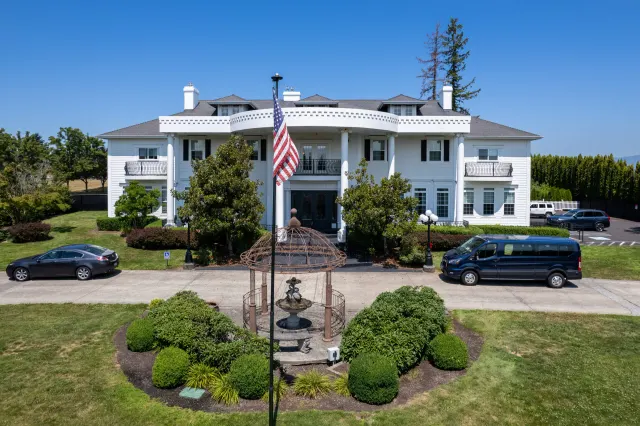
The Camas facility is a residential treatment environment, not a hospital floor. Days are structured - individual therapy, group work, meals, movement, rest - but the setting is built for living through recovery, not just being monitored through it. Camas itself sits along the Columbia River at the edge of the Portland-Vancouver metro, with the quiet of the Pacific Northwest around it. For people coming from Vancouver, it’s a different environment without being a different world.
Your clinical team and medical oversight
Treatment at Discover Recovery is delivered by licensed clinicians with physician oversight, using evidence-based approaches including cognitive behavioral therapy (CBT), dialectical behavior therapy (DBT), EMDR, and medication-assisted treatment (MAT) where clinically appropriate. Medical care isn’t outsourced. Kevin Fischer, MD - board-certified in internal medicine and addiction medicine - oversees the medical dimension of treatment, from detox protocols through discharge planning.
Co-occurring mental health and addiction treatment
Most people who seek addiction treatment are also carrying something else - depression, anxiety, PTSD, bipolar disorder. Treating the substance use while ignoring the condition underneath it is how relapse gets built into a treatment plan. Co-occurring disorder treatment is Discover Recovery’s core clinical specialty. Mental health conditions and substance use disorders are treated simultaneously by the same team - not sequentially, and not by referral to someone across town. If you’ve been searching for inpatient mental health support near Vancouver alongside addiction care, this integrated approach is the honest version of that help.
A day in treatment
A typical residential day runs on rhythm: morning check-in and group session, individual therapy, afternoon skills work or experiential therapy such as art, yoga, or equine-assisted work, and evening reflection and community time. The structure isn’t busywork. Predictable days are themselves therapeutic for a nervous system that’s been running on chaos - and every element of the schedule maps to a clinical purpose in your individual treatment plan.
Getting to Treatment from Vancouver: Logistics for You and Your Family
Discover Recovery’s Camas campus is roughly 20 minutes from downtown Vancouver - east along WA-14, on the Washington side of the Columbia River. That distance is a feature, not a compromise. Close enough that family can be present and the trip doesn’t become its own barrier. Far enough to put real space between you and the people, places, and routines tied to substance use.
What admission day looks like
Admission starts before you arrive: a phone conversation, insurance verification, and a clinical pre-assessment so the team knows how to care for you from hour one. On arrival day, you’ll complete intake paperwork, meet your clinical team, and go through a full medical and psychological assessment. If detox is the starting point, monitoring begins immediately. Pack light, bring your medications and ID, and let us worry about the rest - our admissions team will walk you through exactly what to bring before you come.
Family involvement and visiting during treatment
If you’re reading this for someone you love: your part doesn’t end at drop-off. Family involvement is part of the clinical model, not a courtesy. That includes structured family communication, education about addiction and recovery, and scheduled visitation as treatment progresses. From Vancouver, being 20 minutes away means participating in your person’s recovery is a drive across town - not a flight, and not a promise to visit “when things settle down.”
Does Insurance Cover Rehab in Washington?
Most commercial health insurance plans cover addiction treatment. Federal parity law - the Mental Health Parity and Addiction Equity Act - requires most plans to cover substance use disorder treatment comparably to other medical care. What your specific plan covers, at which level of care, with what out-of-pocket cost, depends on the policy. The fastest way to a real answer is verification: call 866.719.2173 or verify your insurance and our team will check your benefits and explain them in plain language - usually the same day. Discover Recovery is also a VA Community Care Network provider, which matters for the many veterans in the Vancouver area connected to the VA’s local campus. One honest note: if you’re covered by Apple Health (Washington’s Medicaid program), Discover Recovery may not be the right fit - we work primarily with commercial insurance, VA Community Care, and private pay. Vancouver has established public-funded treatment providers, and the Washington Recovery Help Line at 1-866-789-1511 can connect you with them. What matters is that you get help, not where.